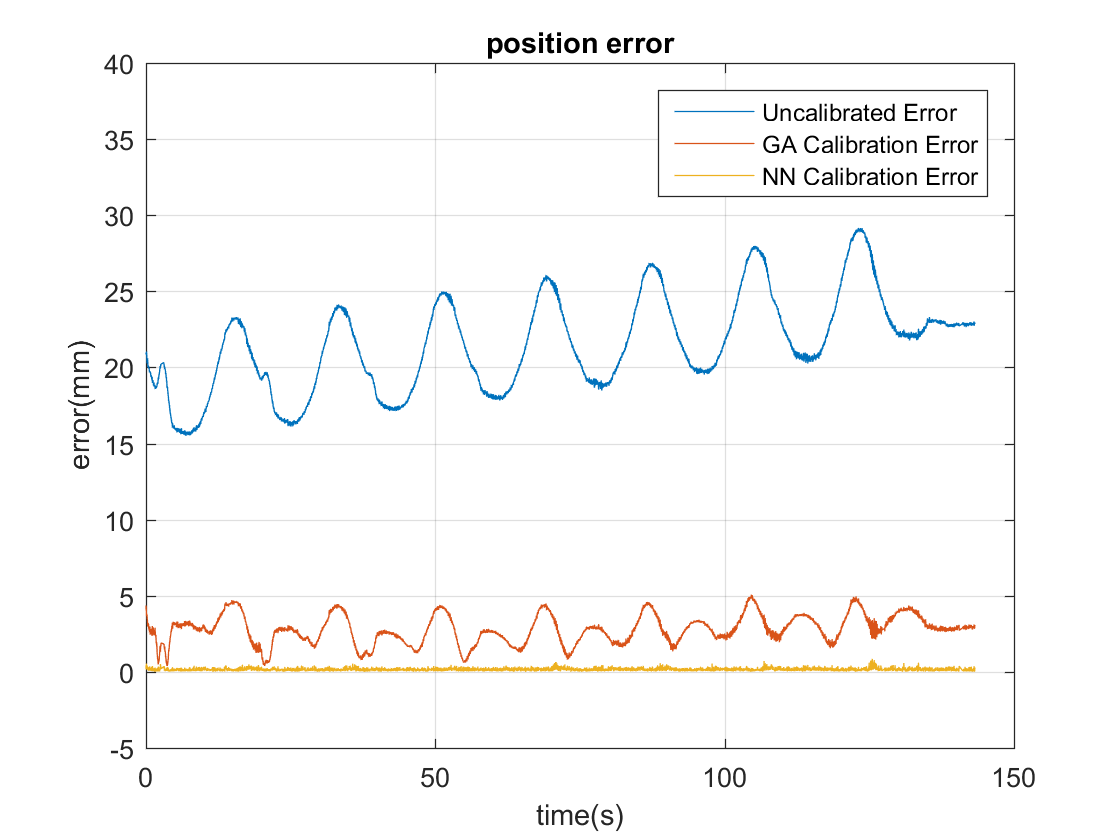
Sina-flex is a surgical robot for performing laparoscopic surgeries and has been designed and fabricated at Sina medical and Robotics Co. Like all the robots, precision is one of the main concerns and it's varies based on the application. Sina-flex has three serial DOF and two parallel DOF. The end of the tool is snakeskin robots, which impairs the calibration process. Because of the relatively high error, the calibration of the Sina robot started.
The classical methods were not very practical in this project, and the Genetic Algorithms (GA) and Neural Networks (NN), which are the newer and more accurate methods, were used in this project.

The reason for using both Genetic Algorithms and Neural Networks was to investigate the behavior of the system after calibration in different ways. Optimization is a model-depended. However, Neural Networks is a model-independent. In the genetic method, the goal is to update the DH parameters, although in the Neural Network, the goal is only to find a relation between inputs and outputs.
The test was performed in four steps. The first step was the calibration of the first three serial DOF, the second step was the calibration of the parallel part of the robot known as the agile eye, the third part was the laparoscopic tool calibration alone ,and last, the overall performance of the robot after the separate calibration of each part was checked. In the end, the inverse kinematics of the robot must also be computed, which can also be found by the neural network and partial derivation method.
Results were impressive and precision enhanced more than 90 percent. Results of this project will be published soon.

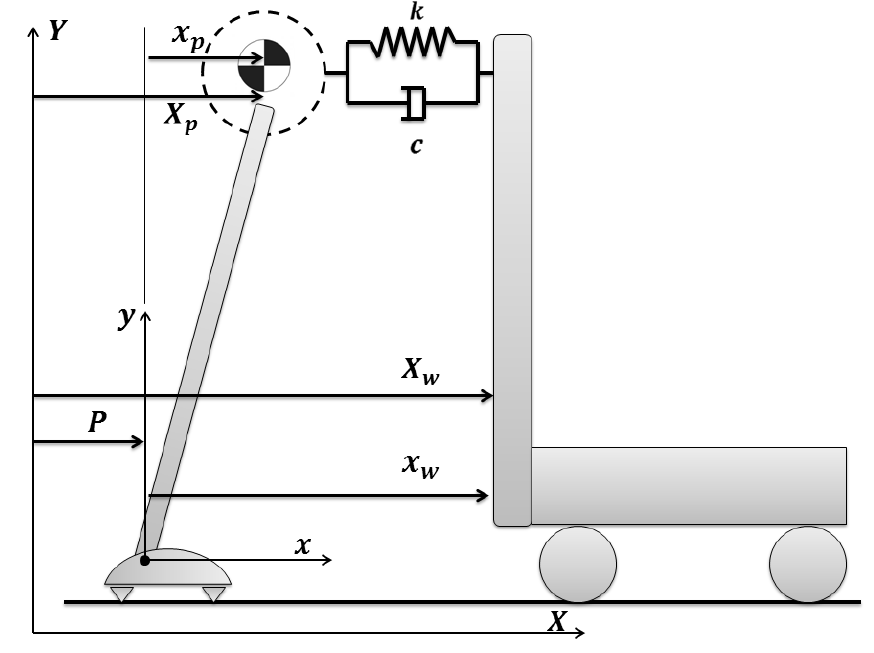
The purpose of the project was to design a PID controller for a Walker robot that helps humans walk along a straight and curved path. The walker has two wheels with a torque control as an input.
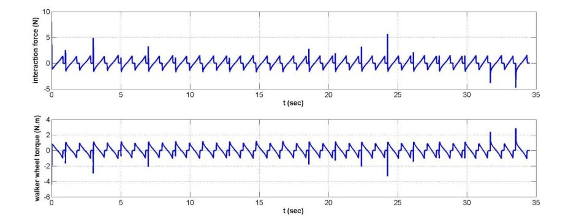
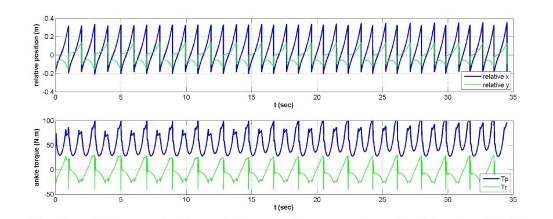
To accomplish this project, it was first necessary to calculate the expected path by solving the LIPM equations. The control was then designed to minimize the interactive force between the human and Walker-Robot. One of the challenges of this project was the design of two input-output controlling system, which was done by MATLAB Simulink.
The PID controller has been designed and some of the results are shown below.


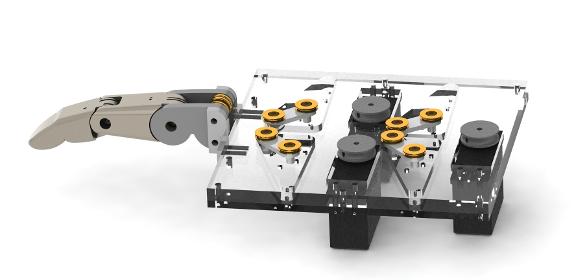
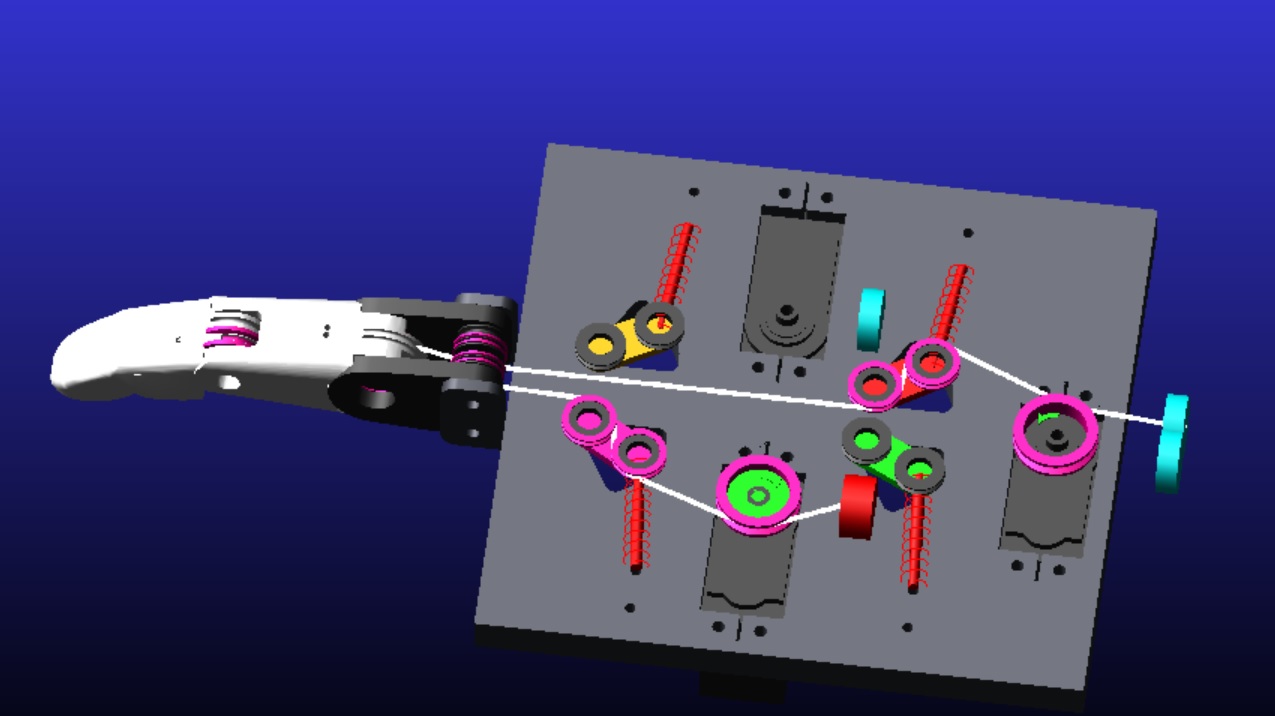
My B.Sc. thesis and project have started atthe beginning of 2017. The project is to make a dexterous robotic hand which is actuated by cables. The main application of such a robot is the instance where people do not have the ability to be present. You can find more details in my article by the name of Design and fabrication of a new robot finger which has been published in Xmech-2018.

The robotic finger has been designed in Solidworks and simulated in ADAMS. Some prototypes have been fabricated for the project and in each prototype the model has improved. As the first serious project for me, Yasin helped me to be more familiar with the manufacturing process such as machining and the process of fabricating a model. The finger was designed and fabricated and results were acceptable.
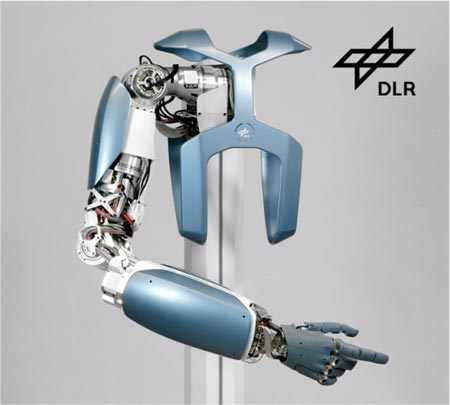
The design is inspired by one of the greatest conducted robotic hands. DLRIII is one of the most beautiful and complicated robots. The main purpose of the project is to improve the construction of the design. The goal was decreasing the complexity and reducing the cost of the construction. The goal is achieved by decreasing the number of motors and altering the design. By using a cheaper fabricating process like 3D-printers, the cost of the fabrication diminished.

Abstract- Dexterous robotic hands are not very popular in production lines. Complexity in mechanism and operation makes such hands less appealing for conventional industrial applications. In this paper,
a structurally simple robotic finger with 3 degrees of freedom, named Yasin is designed and fabricated. Compared to other similar designs, the new mechanism is less complicated to build and maintain, and is better suited for control purposes in low-cost applications.
Numbers of driving motors, which are located in the forearm, are just a few for better similarity with human hands, in terms of number of axles and their relative motions. On the other hand, lengths of the tendons are not fixed for different movements. Instead, the overall length of the cables used for induction of force from one finger to another is fixed. The
general structure of the proposed mechanism is explained and elaborated.
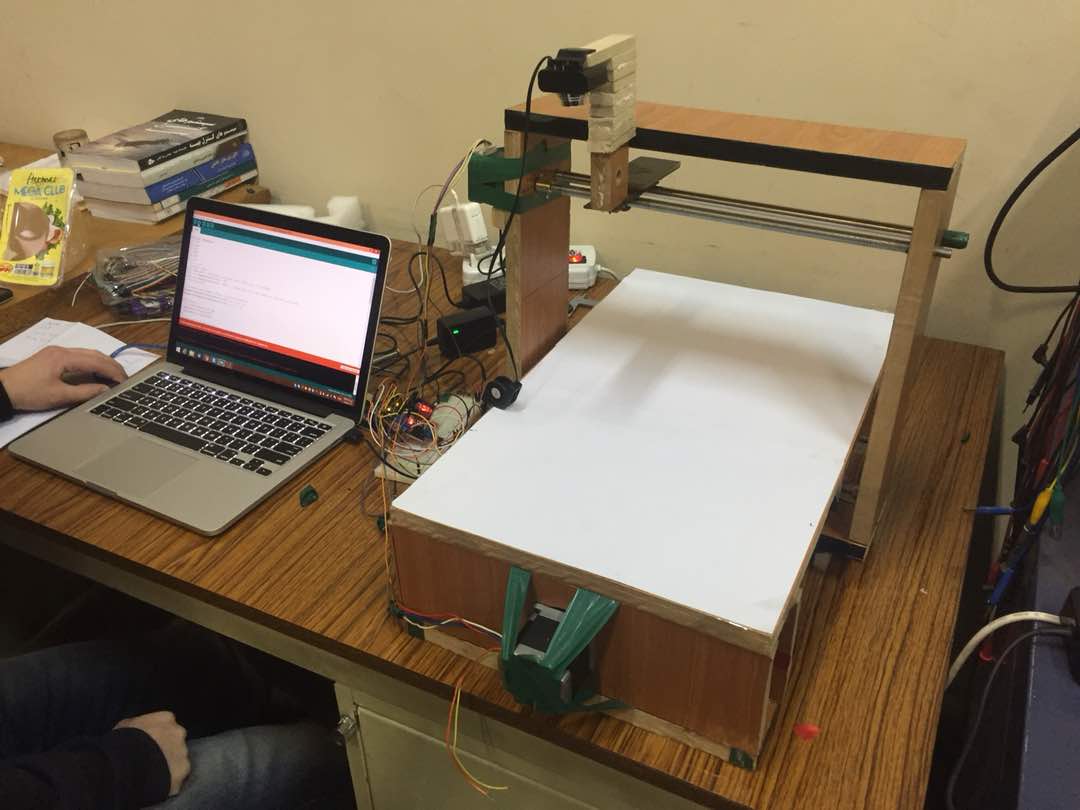
The robot with the name “Fariborz” was designed and fabricated for the introduction to robotics lesson project. The robot has 2 DOF with two prismatic joints and a camera to detect the red-point. After outstandingcollaboration with my team members, it was a great honor for me to be a part of the only team which satisfied all the professor’s demands. The robot detects the red-point and step-motors move the manipulator in two directions. The robot was designed on the Solidworks software and fabricated in the laboratory.
Image processing was performed on the Matlab computer program and the data was transferred to the Arduino. Eventually, the commands of the Arduino actuate the motors. Learning the designing and manufacturing process, connecting Matlab to Arduino and also connecting the webcam to Matlab can be categorized as the objectives of this project. As a leader and a friend, my biggest achievement was the opportunity to help other students who had yet to be familiar with robotics.

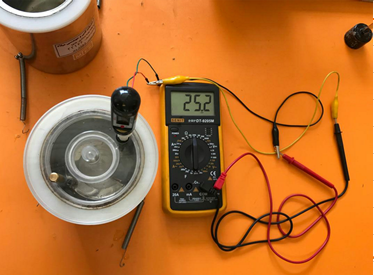
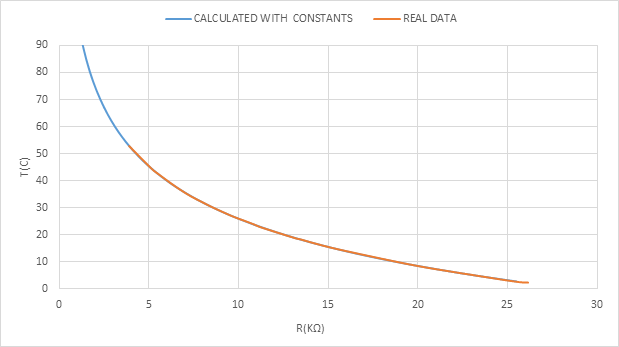
This project was completed pertaining to the lesson for measuring instruments. The project was about calibrating the sensor to measure the ambient temperature. After a great collaboration with my team members and getting more than a hundred data points the results were astonishing. The sensor's accuracy was 0.1 °C. An NTC thermistor was used which had a negative resistance coefficient.

Standard deviation and a Gaussian diagram are illustrated in the tables below. The condition number was 28.2 and that is an acceptable range. As a leader, my challenge was to gather up teammates and work with people who had different knowledge and background levels. The results were perfect and this experiment taught me how to work with different types of people.

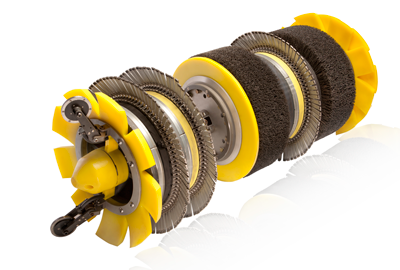
When talking about the context of pipelines we refer to using devices known as PIG to perform various maintenance operations. This is done without stopping the flow of the product in the pipeline. These operations include cleaning and inspecting pipelines but they are not particularly limited to those tasks. This project helped us learn how to make scientific research and familiarize ourselves with the mechanics. A model was designed in Catia and simulated in Ansys fluent and even though they were never constructed we discovered some newfound interests.

Teamwork started from the beginning of my BSc. It started with an instrument which determined the center of the mass in two directions. Finding the center of mass for complex bodies has an application in some high-tech instruments like model helicopters and etc. It was the beginning of our journey atuniversity and it was a big step for us.
Sina medical and Robotics (Sinamed) Co., is fabricating surgical robots and medical instruments. The company is one of the pioneers of robotics in Iran and is expanding its activities into other countries.
My work in this company started in January 2019.
As a fledgling company, there was a lot of work to be done in the company, along with research activities, business negotiations, strategic planning, and other small-scale projects that required to be done in a startup company has been done.
Please click on Sinamed Co. for more information.
Most of the universities' professors agree on the idea that working as a trainee in the industry is essential to understanding the mechanics. Otad Sanat is the place that showed me the influences of the lessons in industry. Otad's concentration is on steel Industries. Their main job is designing and constructing measurements system for special instruments. Click on Otad Sanat Novin Co. for more information.

Make a free website with Yola